
Crystalline Silica Explained: Rules, Risks and Training
Crystalline silica is now one of the most regulated hazards on Australian worksites, and the rules changed significantly in 2024. This guide explains, in plain language, what silica is, where construction and electrical trades actually encounter it, what the engineered-stone ban did and did not change, and what the current rules mean for the way you cut, grind, drill and chase on site.
What is crystalline silica, and where is it on your site?
Crystalline silica is a natural mineral found in concrete, mortar, bricks, tiles, natural stone, fibre cement and engineered stone. Cutting, grinding, drilling or crushing these materials releases respirable crystalline silica dust: particles fine enough to reach deep into the lungs, where they can cause silicosis, lung cancer and other serious, irreversible diseases.
This is not just a benchtop problem. For electrical and construction trades, the everyday exposures are chasing walls for cable runs, drilling and coring concrete, cutting fibre cement, penetrating masonry and demolition dust. If your work disturbs concrete or masonry without dust controls, silica is your hazard too.
What did the engineered-stone ban change?
From 1 July 2024, working with engineered stone benchtops, panels and slabs was banned across Australia: manufacturing, supplying, processing and installing them is no longer permitted, with narrow, tightly controlled exceptions for removing, repairing or disposing of stone that is already installed. The ban dealt with the highest-risk material, but it did not end the silica issue. Concrete, bricks, tiles and natural stone still contain crystalline silica, and the work most trades do every week still generates the dust.
The rules that apply to everyone else
Alongside the ban, work health and safety rules for crystalline silica substances were strengthened from September 2024. In broad terms, if work processes a silica-containing material in a way that generates respirable dust, the business must assess the risk, and where that processing is high risk, apply stronger duties: planned controls, and in various circumstances air monitoring, health monitoring and specific training for the workers involved. Victoria runs its own parallel regime for high risk crystalline silica work, which it introduced back in 2022. The details differ by state and territory, so always confirm your obligations with your regulator.
What is a crystalline silica hazard control statement?
In Victoria, employers and self-employed people must prepare a hazard control statement before starting high risk crystalline silica work. It is a short document that identifies the silica work being done, the hazards it creates and the controls that will be used, and it needs to reflect how the job is actually performed on site. WorkSafe Victoria publishes guidance on preparing one. If you contract into Victorian sites, expect to be asked for it, and expect the controls in it to be checked.
What controls does silica work require?
The rules follow the standard hierarchy of controls, applied to dust:
- Avoid generating dust where possible: design cable routes to reduce chasing, use pre-cut or alternative materials, or relocate the work
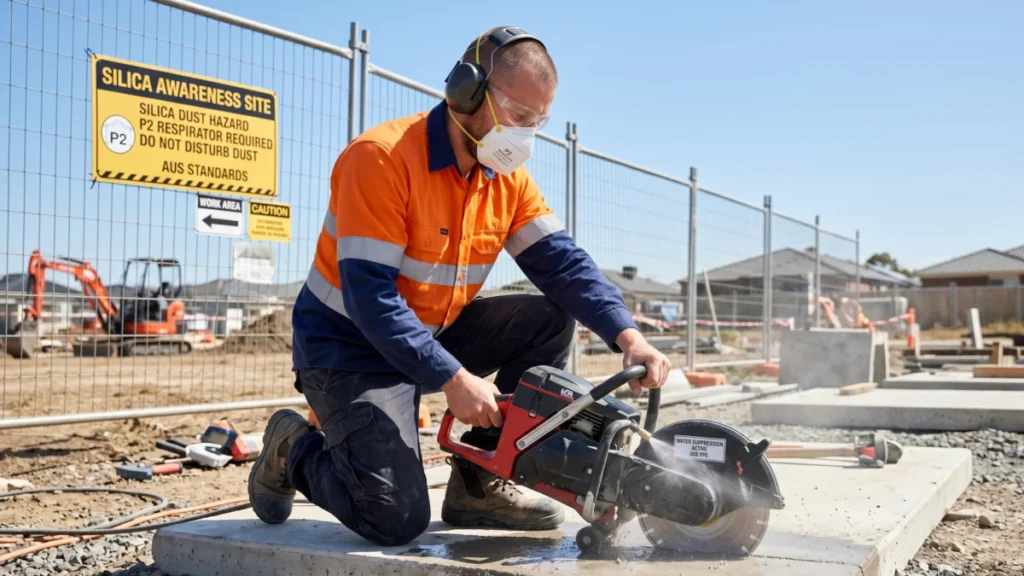
- Suppress or capture it at the source: wet cutting and water suppression, on-tool dust extraction, and local exhaust ventilation rather than uncontrolled dry cutting
- Protect the worker: properly selected and fitted respiratory protection as the final layer, never the only one
- Back it with systems: safe work method statements, silica control planning, housekeeping that does not re-suspend dust, and training so every worker recognises the hazard
What training do you need?
Every Australian jurisdiction requires employers to provide information, instruction and training to workers who may be exposed to crystalline silica dust, and the specific requirements scale with the risk of the work. What satisfies the duty differs by state and territory, so verify your situation with your regulator. As a practical baseline, silica awareness training gives workers and supervisors the shared foundation: recognising silica-containing materials, understanding the health risk, and knowing which controls the job needs before it starts.
Frequently asked questions
Is engineered stone banned in Australia?
Yes. From 1 July 2024, manufacturing, supplying, processing and installing engineered stone benchtops, panels and slabs is banned nationally, with limited controlled exceptions for removing, repairing or disposing of already-installed stone.
Does the silica issue affect electricians?
Yes. Chasing walls, drilling and coring concrete, cutting fibre cement and working in demolition dust all generate respirable crystalline silica. The engineered-stone ban did not change those exposures; the general silica rules cover them.
What is a crystalline silica substance?
Broadly, a material containing at least 1% crystalline silica, such as concrete, mortar, bricks, tiles and natural stone. The strengthened 2024 rules apply where processing these materials generates respirable dust.
Do I need a hazard control statement?
In Victoria, high risk crystalline silica work requires one before the work starts. Other states use different instruments, such as silica risk-control plans for high-risk processing. Check your regulator’s current requirements for your state and the work you do.
Is dry cutting concrete or stone allowed?
Uncontrolled dry processing is exactly what the rules target. Regulators require dust to be suppressed or captured, through wet methods, on-tool extraction or ventilation, with respiratory protection as the final layer rather than the only control.
Online Silica Training
Self-paced online training, one to two hours per course, with a certificate of completion.
This page is general guidance for awareness purposes, current at July 2026. It is not legal or professional advice. Requirements differ by state and territory and continue to evolve. Always confirm your obligations with your regulator: Safe Work Australia, WorkSafe Victoria, SafeWork NSW, WorkSafe Queensland or your local authority.