Safety
Managing Risks of Crystalline Silica
Understand crystalline silica exposure, health effects and the controls that keep workers safe and compliant on site.
Estimated time1 Hour
FormatOnline, self-paced
On completionCPD certificate
Course Overview
Silica Awareness is an online, self-paced course on respirable crystalline silica for electrical, communications and construction workers who disturb concrete, masonry or stone, and for the supervisors who plan that work. It is written to the crystalline silica duties in the model WHS Regulation as they apply in New South Wales, where the course was developed, and it is used by workers in several other states.
Where the dust comes from on your jobs
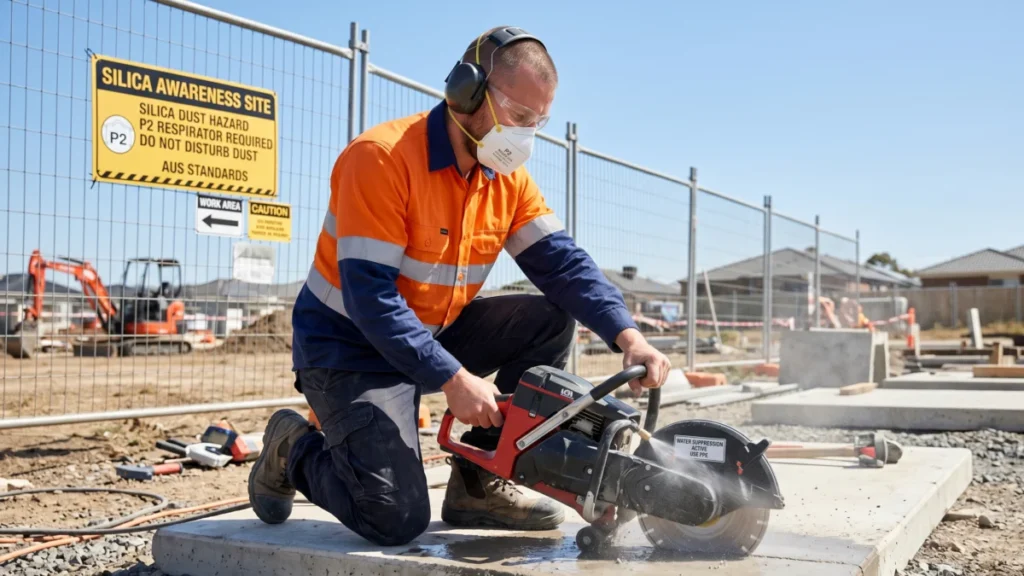
Silica exposure is not only a benchtop-factory problem. Chasing a wall for a cable run, coring or drilling concrete, cutting fibre cement sheet, penetrating masonry for conduit, and working near demolition dust all generate respirable crystalline silica. If your day involves disturbing concrete or masonry without dust controls in place, this hazard belongs to you, whichever trade you carry.
What the course covers
The course starts with the health risks: how silicosis develops, what its early symptoms look like, and the links to lung cancer, COPD and kidney disease. It then works through how to tell whether a material contains crystalline silica, including the four regulated forms and the one percent threshold, and how to read a safety data sheet for silica content and controls. From there it covers what processing and high-risk processing mean, the eight-hour exposure standard, when a silica risk control plan is required and how it relates to a SWMS, controlled processing and the hierarchy of controls, P2 respirators and their fit and maintenance, and when air monitoring and health monitoring are required, including your right to a copy of your health monitoring report.
One course, different state rules
Every state and territory regulates silica work, and the training rules differ. New South Wales and Queensland set specific training requirements for workers involved in high-risk processing of crystalline silica substances; Queensland has its own Managing Risks of Crystalline Silica (QLD) course, which meets Queensland’s specific regulatory requirements. Western Australia approves courses through its regulator, and our Managing Risks of Crystalline Silica (WA) course is listed by WorkSafe WA as approved. The ACT mandates a nationally accredited course, 10830NAT, for declared occupations; this course is not that unit. Victoria runs its own crystalline silica regime through WorkSafe Victoria. For the rules in your state, read our plain-language guide, Crystalline Silica Explained.
Who should take this course
- Electricians and communications techs who chase, core, drill or penetrate masonry and concrete
- Construction and demolition trades working around dust-generating tasks
- Supervisors and site managers planning work that disturbs silica-containing materials
- Apprentices starting out on site
On completion you receive a certificate and a signed training record listing the topics covered. The certificate records completed learning; it is not a licence, and it is not the nationally accredited unit 10830NAT. Training requirements vary by state, so check what applies to your work before relying on any course for a specific obligation.
New to the rules? Read our plain-language guide, Crystalline Silica Explained, covering the engineered-stone ban, hazard control statements and dust controls.
What You’ll Learn
Recognise the health risks of respirable crystalline silica: how silicosis develops, its early symptoms, and the links to lung cancer, COPD and kidney disease
Identify crystalline silica in materials: the four regulated forms, the common construction products and their typical silica levels, and the one percent threshold
Read a safety data sheet to find a material's silica content and the hazards and controls it specifies
Understand what processing and high-risk processing mean, how RCS is generated, and the eight-hour workplace exposure standard
Know when a silica risk control plan is required, what it must contain, and how it relates to a SWMS and ongoing review of the controls
Apply controlled processing and the hierarchy of controls, including on-tool extraction, water suppression and housekeeping that does not create dust
Select, fit and maintain P2 respiratory protective equipment to the Australian Standard
Know when air monitoring and health monitoring are required, how results are used, and your right to a copy of your health monitoring report
What’s Included
Self-paced online module
Knowledge assessment
Certificate on completion
Approx. 1 Hour
Records CPD hours
Records your CPD hours
On completion you’ll receive a certificate recording your CPD hours, ready to add to your professional development record.
Prefer face-to-face training?
NECA Training delivers this in person: silica training in Canberra, on the South Coast and in Brisbane.
Training a team?
Buy 2 or more seats and your company group is set up automatically.
One link for your whole team - Share it (or the QR code) and each person is enrolled as they join.
Everyone registers as themselves - Each certificate is issued in the learner’s own name.
You see everyone’s progress - Your purchase makes you the group manager.
Need more seats later - Buy the same course again and they’re added to your existing group.
Frequently Asked Questions
What is crystalline silica and why is it dangerous?
Crystalline silica is a natural mineral found in stone, concrete, bricks, tiles and engineered stone. Cutting, grinding or drilling these materials releases fine respirable silica dust which, when inhaled, can cause silicosis and other serious, irreversible lung diseases.
What does silica awareness training cover?
The health effects of respirable crystalline silica, how to identify silica in materials and read a safety data sheet, what high-risk processing is, when a silica risk control plan is required, the hierarchy of controls from on-tool extraction to P2 respirators, and when air monitoring and health monitoring apply.
Who should do silica awareness training?
Construction and electrical workers who may disturb silica-containing materials, and the supervisors responsible for managing dust exposure.
Can I do silica awareness training online?
The whole course runs online: watch the module, sit the knowledge assessment and download your certificate from the same account, on whatever device you have. Progress is saved if you stop partway.
Does this course count toward my CPD or licence renewal?
This course records self-paced professional development, with a certificate of completion documenting your learning. It is not represented as an approved licence-renewal or skills-maintenance course. Renewal requirements are set by your state or territory regulator; see our state-by-state electrician licensing guide and confirm what applies to your licence before relying on any course for renewal.